


What is vitamin E and which foods contain it?
Balanced nutrition is very important for maintaining health, strengthening the immune system, and ensuring the body’s daily functions are carried out properly. A nutrition program based on natural and healthy foods that includes all food groups in appropriate amounts provides the body with the energy it needs while also supplying all nutrients in balanced proportions. In addition to macronutrients such as proteins, carbohydrates, and fats, the body’s need for vitamins and minerals must also be met through food intake. Vitamin E, a fat-soluble vitamin, plays important roles in many areas such as skin health, eye health, and hormonal regulation. As one of the antioxidant vitamins, vitamin E is also highly effective in strengthening the immune system. Therefore, it is important to regularly obtain the vitamin E required by the body through diet.
What is vitamin E?
Vitamin E is one of the essential vitamins known as tocopherols, required for the body’s daily functions. Like vitamins A, D, and K, vitamin E is fat-soluble and can be stored to a certain extent in the liver. After being absorbed in the small intestine through food, it is stored in the liver, making its deficiency less common compared to water-soluble vitamins. In addition to the liver, some vitamin E can also be stored in the heart, kidneys, muscles, and tissues. There are eight different forms of vitamin E, but the only form usable by the human body is alpha-tocopherol. Vegetable oils and plant-based foods containing healthy fats are the main sources of vitamin E. Although it can be obtained through food, in some cases it may also be taken as a dietary supplement. The daily requirement for adults is approximately 10 mg for men and 8 mg for women. For children, the requirement ranges between 3–10 mg depending on age. Meeting this requirement daily is very important. When vitamin E sources are not consumed in sufficient amounts over a long period, or when deficiency develops due to certain diseases, various health problems may arise.
What are the benefits of vitamin E?
Vitamin E performs many essential functions in the human body. Adequate levels are necessary for the proper functioning of many organs. It is also very important for the healthy functioning of the hormonal system. In particular, sufficient intake of vitamin E supports the production of sex hormones, helps prevent gynecological and urological disorders, and enhances reproductive health.
As an antioxidant, vitamin E reduces free radicals and prevents harmful effects in the body. In this way, it lowers oxidative stress, prevents genetic damage at the cellular level, and helps protect against many diseases, including cancer. By strengthening the immune system, adequate vitamin E intake helps protect the body from infectious diseases.
Vitamin E is also essential for eye and skin health. During childhood, it supports healthy eye development, while in adults it helps maintain eye health. It is also important for maintaining skin elasticity, increasing skin regeneration, achieving a healthier skin appearance, and preventing issues such as wrinkles.
Other benefits of vitamin E include:
-
Prevents cellular damage: Due to its antioxidant properties, vitamin E prevents free radicals from damaging cells and contributing to cancer. It helps reduce the risk of cancer and cardiovascular diseases.
-
Protects against skin aging: It helps maintain skin moisture balance, accelerates wound and burn healing, and prevents wrinkles and other skin issues. It is also widely used in cosmetic products.
-
Improves hair and nail health: It supports healthy hair growth, reduces hair breakage and shedding, and strengthens nails, preventing yellowing, cracking, and splitting.
-
Reduces effects of skin conditions such as eczema and psoriasis: Adequate intake helps reduce dryness symptoms in conditions like eczema and atopic dermatitis and improves skin hydration. It also supports treatment in psoriasis.
What foods contain vitamin E?
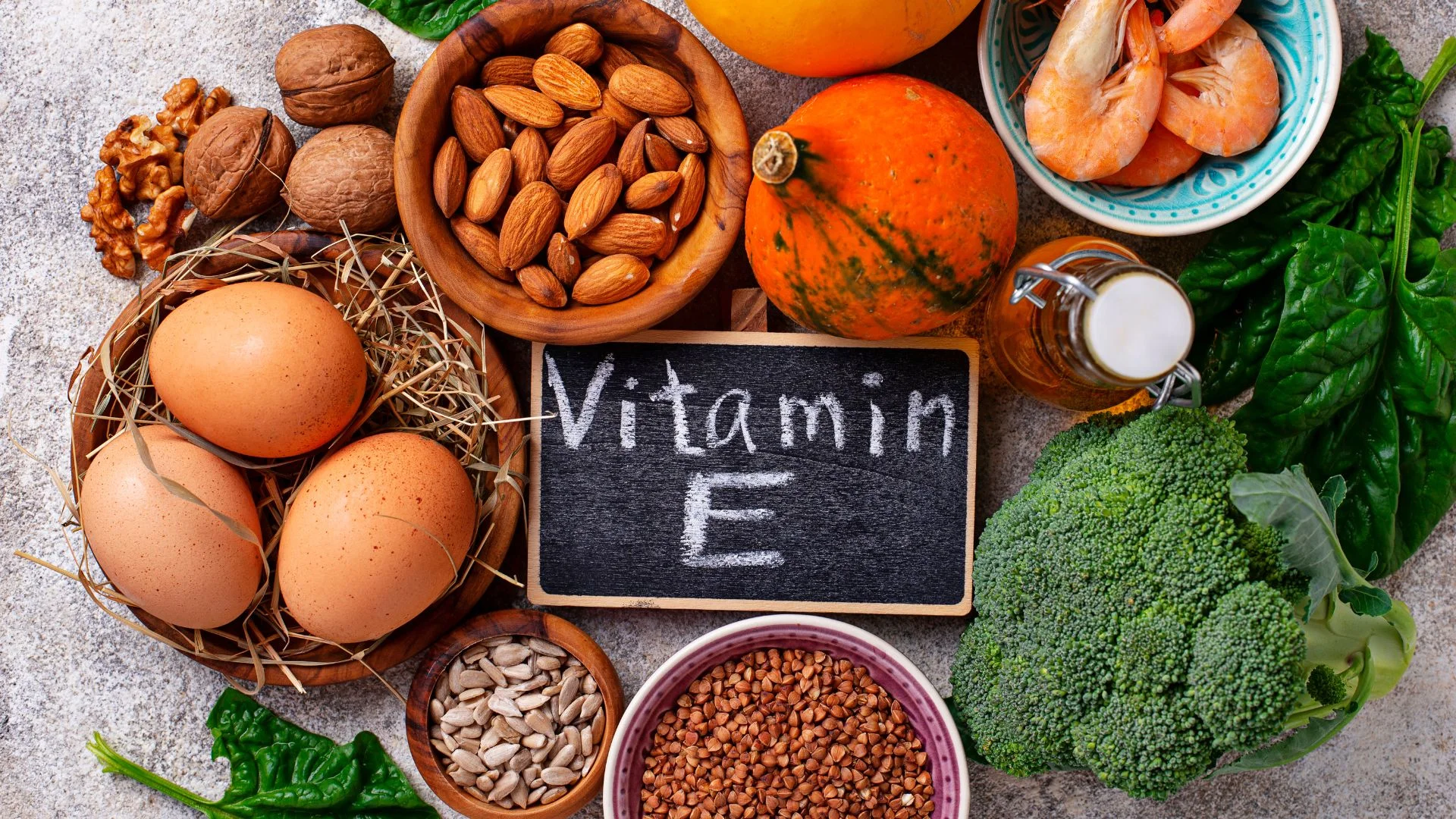
To meet daily vitamin E needs, the diet should include sufficient sources of this vitamin. Foods rich in vitamin E include:
-
Vegetable oils such as olive oil and hazelnut oil
-
Oil seeds and nuts such as hazelnuts, almonds, walnuts, and sunflower seeds
-
Vegetables and greens such as spinach, butter lettuce, parsley, lettuce, celery, cabbage, broccoli, and pumpkin
-
Fish such as salmon, mackerel, sardines, and tuna
-
Fruits such as avocado, banana, and kiwi
-
Cereals and grains
-
Butter
-
Red meat
-
Eggs
Should vitamin E supplements be used?
Vitamin E supplements or multivitamin-mineral tablets containing vitamin E are available in pharmacies and health stores. However, the body’s requirement for vitamin E can generally be met through a balanced and healthy diet that includes all food groups. Therefore, individuals without medical conditions that prevent proper intake do not need to use vitamin E supplements. As with all vitamins and minerals, obtaining vitamin E naturally is healthier.
Uncontrolled use of supplements without medical advice is not recommended, as excessive intake of vitamins and minerals may have negative health effects. However, vitamin E supplements may be prescribed by a physician for individuals diagnosed with deficiency or those who cannot obtain sufficient vitamin E through diet due to specific medical conditions. These supplements are usually in capsule form, and dosage and frequency must be determined by a doctor.
Vitamin E deficiency is more common in individuals who consume low-fat diets or insufficient vegetable oils. It may also occur in people with digestive system disorders that impair absorption.
Symptoms of vitamin E deficiency may include vision problems, weakness and fatigue, anemia, cracks in the skin and tongue, easy bruising, muscle and bone pain, muscle loss, and deterioration of nail and hair health. Since many of these symptoms can also be seen in other diseases, individuals experiencing them should consult a healthcare professional for proper evaluation.
If vitamin E deficiency is suspected, laboratory tests can determine whether supplementation is necessary, and following medical recommendations is essential for maintaining health.